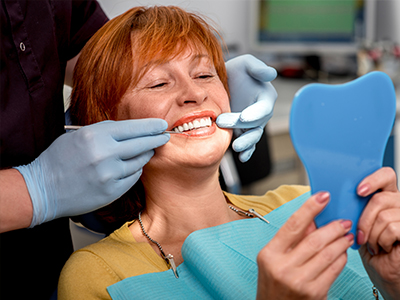
All-on-6® is a modern approach to replacing an entire arch of teeth using six dental implants to support a fixed prosthesis. Unlike removable dentures that sit on the gums, this method anchors a full-arch bridge directly to the jawbone, restoring the look and basic functions of natural teeth. Patients typically notice major improvements in chewing ability, speech clarity, and overall comfort because the prosthesis is stable and integrated with the bone.
Because the prosthetic arch is permanently attached to the implants, day-to-day routines shift back toward what you would do with natural teeth. Cleaning involves regular brushing and flossing of the prosthesis and routine visits for professional maintenance, rather than nightly removal and soaking. For many people, that closer resemblance to a natural mouth makes daily life simpler and more confident.
All-on-6® is designed to be a long-term solution when full-arch tooth replacement is required. It’s important to understand that this treatment is a restorative commitment: proper planning, precise placement, and ongoing care all contribute to predictable outcomes and longevity.
Treatment begins with a comprehensive evaluation that typically includes clinical exams, digital imaging, and a review of medical history. Modern diagnostics such as CBCT scans allow the dental team to map bone anatomy in three dimensions and to plan implant positions that maximize stability and avoid critical structures. This digital planning stage is essential for turning a general goal—replacing missing teeth—into an individualized, predictable surgical plan.
On the day of implant placement, six implants are positioned strategically across the arch to distribute forces evenly and provide strong support for a fixed prosthesis. Depending on individual anatomy and planning, a provisional (temporary) set of teeth can often be attached the same day or shortly afterward, allowing the patient to leave with functional teeth. Over the following weeks to months the implants integrate with the bone in a process called osseointegration, creating the foundation for a definitive, custom-crafted prosthesis.
Throughout treatment, attention to precision is paired with attention to comfort. Local anesthesia, sedation options, and careful surgical technique are used to minimize discomfort, and post-operative instructions help patients manage the healing phase. The collaborative approach between surgical and restorative teams helps ensure that both form and function are addressed as the final prosthesis is developed.
One of the most important benefits of All-on-6® is its stability under function. Because six implants secure the arch, the prosthesis resists shifting and delivers improved biting force compared with many removable solutions. That means patients can eat a wider range of foods more confidently, which supports nutrition and quality of life.
From a biological standpoint, implants help preserve the jawbone. When teeth are missing, the underlying bone tends to resorb over time; implants transmit chewing forces into the jaw, stimulating bone maintenance. For many patients this bone-preserving effect reduces the need for extensive grafting procedures and contributes to a healthier facial structure over the long term.
All-on-6® also simplifies hygiene compared with removable full dentures. The prosthesis is maintained through daily home care and professional cleanings, and because it’s fixed, there’s no adhesive or overnight soaking to manage. Regular professional follow-up allows clinicians to monitor the health of the implants, the fit of the prosthesis, and the condition of surrounding tissues so adjustments can be made proactively.
All-on-6® is frequently recommended for individuals who have lost most or all teeth in an arch or whose remaining teeth are not salvageable due to advanced decay, gum disease, or trauma. It is also an option for people who find removable dentures uncomfortable or who want a more secure, fixed restoration. That said, candidacy depends on several clinical and lifestyle factors that are assessed during the consultation process.
Bone quantity and quality are important considerations because they affect implant stability. In many cases, placing six implants can provide enough support to avoid additional grafting, but each situation is unique. Overall health, habits such as tobacco use, and certain medical conditions can also influence healing and long-term outcomes. A careful medical history and targeted imaging help the clinical team identify any issues that should be managed before moving forward.
Age alone is not a disqualifier; rather, the focus is on overall oral and systemic health, realistic expectations, and commitment to follow-up care. During the evaluation your clinician will discuss what the treatment entails, alternative options, and the steps needed to optimize success so you can make an informed decision that aligns with your goals.
After implant placement and provisionalization, patients should anticipate a healing period during which soft tissues recover and implants integrate with the bone. Initial tenderness and mild swelling are normal and typically resolve within a week or two; specific post-operative guidance covers diet, oral hygiene, and activity limitations. The temporary prosthesis provides function during healing while the final restoration is fabricated to precise fit and esthetics.
Long-term success depends on ongoing care. Daily cleaning routines for the prosthesis and surrounding gums are essential, and scheduled dental visits allow the team to perform professional maintenance, monitor implant health, and address wear or fit issues before they become problems. With consistent care, implants and a well-designed prosthesis can offer years of reliable service.
Occasionally, complications such as peri-implant inflammation can occur; early detection and prompt management are key. Maintaining open communication with your dental provider and attending regular follow-ups help protect the investment in your oral health and preserve the function and appearance of the All-on-6® restoration.
At Bella Vida Dental we aim to guide patients through every phase of full-arch restoration with clear explanations, modern diagnostics, and coordinated treatment planning. If you’re considering All-on-6® and want to learn how this solution could restore comfort, function, and confidence, please contact us for more information.


All-on-6® is a full-arch tooth replacement approach that uses six dental implants to support a permanently fixed prosthesis across the upper or lower jaw. Unlike traditional removable dentures that rest on the gums and rely on adhesives, the All-on-6 prosthesis is anchored to the jawbone, providing greater stability and resistance to shifting. Patients commonly experience improvements in chewing ability, speech clarity, and comfort because the arch behaves more like natural teeth.
The fixed design also changes daily maintenance: instead of nightly removal and soaking, care focuses on routine brushing, targeted cleaning around implant interfaces, and regular professional maintenance. Because the prosthesis integrates with the implants, many patients describe a more natural feel and simplified daily routines. Long-term success depends on precise planning, surgical placement, and consistent follow-up care.
Candidates for All-on-6® typically include people who have lost most or all teeth in an arch or whose remaining teeth are not salvageable due to decay, periodontal disease, or trauma. Evaluation focuses on oral and systemic health, available jawbone volume and density, and the patient’s commitment to ongoing care and maintenance. Age by itself is not a disqualifier; clinicians emphasize overall health and realistic expectations when assessing suitability.
Bone quality is a key factor because implants need stable support, and placing six implants can often distribute forces to reduce the need for extensive grafting. Habits such as tobacco use and certain medical conditions can influence healing and long-term outcomes, so these are reviewed during the consultation. A thorough clinical exam and 3-D imaging help the dental team determine whether All-on-6® is the best option or if alternative treatments should be considered.
Treatment begins with a comprehensive evaluation that usually includes a clinical exam, medical history review, and CBCT (cone beam) imaging to map bone anatomy in three dimensions. Digital planning software is often used to determine ideal implant positions that avoid critical structures and maximize support for the prosthesis, and surgical guides can be fabricated from that plan. This digital workflow converts treatment goals into a predictable surgical and restorative strategy.
On the day of surgery, six implants are placed across the arch in positions chosen to distribute chewing forces evenly and optimize long-term stability. Depending on the case and the clinician’s plan, a provisional set of teeth can frequently be attached immediately or soon after surgery so the patient leaves with functional teeth. Over the following weeks to months the implants integrate with the bone (osseointegration), after which a definitive, custom-crafted prosthesis is delivered for final fit and esthetics.
After implant placement and provisionalization, patients usually experience some tenderness, mild swelling, and minor bruising that typically peak within the first 48–72 hours and improve over one to two weeks. Post-operative instructions often include a soft diet for several days, careful oral hygiene around the surgical sites, and activity restrictions to support healing. Prescription or over-the-counter medications may be recommended to manage discomfort and inflammation during the initial recovery phase.
Follow-up visits are scheduled to monitor healing, review oral care, and confirm that implants are integrating properly with the bone. The provisional prosthesis provides function while osseointegration occurs, and the timeline to a final restoration can vary depending on individual healing and clinical judgment. Clear communication with your dental team ensures any concerns are addressed promptly and that you understand the stages of recovery.
Yes—one of the primary benefits of All-on-6® is improved function compared with many removable solutions, allowing patients to eat a broader range of foods with greater confidence. The fixed prosthesis transfers chewing forces to the implants and underlying bone, restoring much of the biting power lost with missing teeth. Speech is also commonly improved because the prosthesis is stable and does not shift during talking or laughing.
There is an adaptation period during which you may need to practice certain sounds and slowly reintroduce firmer foods, but most patients find that normal eating and speaking return as comfort and function improve. Your clinician can provide specific guidance on diet progression and exercises, and adjustments to the prosthesis can be made to improve comfort and articulation. Regular maintenance helps preserve function and minimizes the risk of wear-related changes over time.
Daily care combines routine oral hygiene with targeted cleaning around implant interfaces and under the prosthetic framework as recommended by your clinician. Brushing the prosthesis with a soft-bristled brush and using interdental brushes or floss designed for implants helps remove plaque and food particles from critical areas. Antimicrobial rinses may be suggested for short-term use after surgery or when additional plaque control is needed.
Professional maintenance visits are an important part of long-term care: the dental team will perform thorough cleanings, check implant health, and assess the fit and condition of the prosthesis. Early detection of soft-tissue inflammation or mechanical wear allows timely intervention, which improves outcomes. Patients who follow home care instructions and attend scheduled follow-ups generally experience better longevity and fewer complications.
As with any surgical procedure, All-on-6® carries potential risks such as infection, implant failure, nerve irritation, sinus complications (for upper implants), and soft-tissue inflammation around the implants. Peri-implant mucositis and peri-implantitis are inflammatory conditions that can develop if plaque control is inadequate, and they require early recognition and management to prevent implant loss. Most complications are manageable when identified promptly through clinical exams and radiographic monitoring.
Preoperative planning, careful surgical technique, and comprehensive aftercare all reduce the likelihood of adverse events, and clinicians will outline specific prevention and management steps during consultation. If complications arise, treatments can range from improved hygiene and localized therapy to surgical intervention when necessary. Open communication with your dental provider and adherence to follow-up schedules are the best defenses against long-term problems.
The longevity of an All-on-6® solution depends on multiple factors, including the quality of the implants and prosthetic materials, the precision of surgical and restorative work, and the patient’s oral hygiene and general health. Well-planned and well-maintained All-on-6 restorations can function reliably for many years, and periodic maintenance allows clinicians to address wear or component issues before they become serious. Material advances and careful laboratory work also influence the aesthetic durability and structural strength of the final prosthesis.
Patient factors such as smoking, uncontrolled systemic disease, and bruxism (habitual grinding) can increase the risk of complications and may shorten the effective lifespan of implants and prosthetic components. Regular professional checkups, timely repairs or refinements, and strict at-home care help maximize service life. When maintenance is performed proactively, many patients enjoy long-term function and appearance from their restorations.
Both All-on-6® and All-on-4® are full-arch implant-supported approaches, but they differ primarily in the number and distribution of implants used to support the prosthesis. All-on-6 uses six implants to enhance load distribution and may provide additional support in jaws where bone quality allows placement of more fixtures, whereas All-on-4 relies on four strategically angled implants to maximize available bone and often avoid grafting. The clinical choice between them depends on bone volume, biomechanics, and the patient’s individual anatomy and goals.
Other implant options include individual tooth implants, implant-supported overdentures, and hybrid restorative designs, each with different implications for maintenance, stability, and cost. A comprehensive evaluation, including 3-D imaging and discussion of functional priorities, helps the dental team recommend the most appropriate solution. The goal is to match the restorative approach to the patient’s needs for comfort, function, and long-term predictability.
Selecting a team with coordinated surgical and restorative experience, proficiency with digital planning and CBCT imaging, and a track record of full-arch implant restorations is important for predictable results. Look for clinicians who explain the planning process, show examples of digital workflows, and describe follow-up protocols for maintenance and complication management. Effective communication and a clear treatment timeline help ensure that both function and esthetics are addressed as part of a unified plan.
Bella Vida Dental integrates modern diagnostics, coordinated care, and detailed treatment planning to guide patients through full-arch restorations with clarity and consistency. During your consultation, ask about team roles, the use of surgical guides, and the type of provisionalization you can expect so you understand each step. A transparent, team-based approach is a strong indicator of quality care for complex implant treatments.
Begin by scheduling a consultation so the clinical team can perform a thorough oral exam, review your medical history, and obtain appropriate imaging such as a CBCT scan to assess bone anatomy and implant feasibility. The evaluation also includes discussion of lifestyle factors that may affect healing, explanation of the treatment sequence, and presentation of alternative options when appropriate. Bringing a list of medications and a summary of prior dental work can streamline the assessment.
If you would like to schedule an appointment, Bella Vida Dental is located at 4625 N Oracle Road #102, Tucson, AZ 85705, and can be reached at the numbers listed for new or existing patients on the practice website. Your first visit will focus on information gathering and treatment planning so you can make an informed decision about moving forward with full-arch restoration. Clear next steps and a tailored plan will be provided after the initial assessment.

Ready to schedule your next dental appointment or have questions about our services?
Contacting Bella Vida Dental is easy! Our friendly staff is available to assist you with scheduling appointments, answering inquiries about treatment options, and addressing any concerns you may have. Whether you prefer to give us a call, send us an email, or fill out our convenient online contact form, we're here to help. Don't wait to take the first step towards achieving the smile of your dreams – reach out to us today and discover the difference personalized dental care can make.