A confident, healthy smile combines more than just straight teeth — it requires balance between tooth position, jaw relationships, and the soft tissues that support them. Orthodontics uses carefully planned, gentle forces to guide teeth into more efficient and attractive positions. Treatment can range from minor tooth movements to full-bite corrections that restore comfort and function.
Contemporary orthodontic care is collaborative. Our team evaluates your overall oral health, watches how your bite performs during chewing and speaking, and takes into account any prior dental work before recommending a treatment path. The goal is to produce a result that looks natural, feels comfortable, and lasts.
Today’s orthodontic appliances are designed with patient comfort and daily life in mind. Whether using subtle fixed brackets, low-profile metal systems, or nearly invisible removable aligners, each approach applies predictable, incremental forces to move teeth safely. Treatment plans are tailored so that each step supports long-term stability and oral health.
At Bella Vida Dental, we focus on creating individualized plans that respect both the functional needs and aesthetic goals of each patient. Our approach emphasizes careful diagnosis, ongoing monitoring, and clear explanations so patients understand what to expect at every stage of care.
Good alignment is about more than appearance — it directly affects oral hygiene, the way your bite distributes force, and the longevity of your teeth. Misaligned teeth create areas that are harder to clean, increasing the risk for decay and gum problems. Addressing alignment can make daily hygiene more effective and reduce future restorative needs.
Correct tooth position also protects teeth from abnormal wear and helps maintain the health of the jaw joints and surrounding muscles. When teeth meet properly, chewing is more efficient and the forces are shared evenly across the dental arch, which reduces the chance of chips, fractures, and uneven enamel loss.
Straight teeth also support clearer speech patterns and reduce strain on the jaw muscles. Many patients notice improvements in comfort and function as their bite becomes more balanced. Orthodontic treatment can therefore contribute to both oral comfort and overall well-being.
Easier cleaning: properly aligned teeth reduce hard-to-reach areas, helping brushing and flossing work more effectively.
Improved protection: teeth that sit correctly are better cushioned by the lips and cheeks, lowering the risk of traumatic injury.
Enhanced function: a harmonious bite supports efficient chewing and clearer speech, improving daily comfort.
Reduced wear: an even bite prevents localized overloading that can lead to premature tooth wear or fractures.
Joint and muscle support: balanced alignment lessens undue stress on the temporomandibular joints and related musculature.
Long-term wellness: when alignment and oral health reinforce one another, patients enjoy better outcomes and fewer corrective procedures down the road.

Determining the best orthodontic approach begins with a comprehensive evaluation. We examine tooth positions, jaw relationships, facial proportions, and oral habits that can influence outcomes. Diagnostic records — including photographs, digital models, and imaging — help us create a treatment plan matched to each patient’s anatomy and goals.
Timing is an important consideration, especially for growing patients. Early assessment allows us to identify problems that benefit from intervention while the jaws are still developing. For adults, the focus shifts to balancing orthodontic movement with existing dental restorations and periodontal health to ensure a stable result.
Patient lifestyle and preferences are part of the decision too. Some individuals prefer the predictability and removability of clear aligners, while others need the control that fixed appliances offer. We discuss pros and cons for each option and explain how the chosen method will achieve the desired outcomes.
The complexity of the bite problem, including jaw alignment and tooth position
How crowded or spaced the teeth are, and whether dental extractions are necessary
Your growth stage (in children) and the condition of supporting bone and gums (in adults)
The estimated duration of treatment and any additional appliances needed for support
Patient commitment to oral hygiene and following appliance recommendations

Orthodontics has evolved rapidly in recent years, driven by improved materials, digital workflows, and refined mechanics. These advances allow clinicians to plan tooth movements precisely and offer patients options that fit their daily lives. As a result, treatments are generally faster, less intrusive, and easier to maintain than in the past.
Three-dimensional imaging and digital scans give us a clear picture of how teeth and jaws relate in space. This technology supports treatment simulations and custom appliance fabrication, which increases the accuracy of predicted results. In many cases, digital planning reduces unexpected adjustments and helps patients see a visual roadmap of their treatment.
Material innovations — from low-profile metal brackets to tooth-colored ceramics and tailored aligner plastics — make appliances more comfortable and less conspicuous. These modern systems also place forces more efficiently, which supports safer, more controlled tooth movement.
Digital impressions and intraoral scanning for faster, more accurate records
3-D imaging and software-driven treatment planning for precise movement maps
Cosmetic bracket options and low-profile wires for increased comfort and appearance
Clear aligner systems that offer discreet, removable treatment for many cases
Specialized mini-implants and auxiliaries that provide anchorage for complex movements
Clear aligner therapy has become a mainstream option because it blends aesthetic discretion with predictable mechanics. Aligners are custom-made to fit a patient’s teeth and are replaced periodically to guide incremental movement. Because they are removable, aligners make oral hygiene and eating simpler during treatment.
Not every case is ideal for aligners, but for many teens and adults they are an excellent choice. Treatment relies on careful planning and patient adherence to wear schedules to achieve the intended results. When aligners are appropriate, they often allow patients to pursue orthodontic goals without changing their day-to-day routines.
At Bella Vida Dental, we stay current with these technologies and will advise whether aligners or a different appliance system is the best route to achieve a healthy, lasting outcome.
Children benefit from timely monitoring so that emerging issues are caught early. Certain problems respond best to intervention while jaw growth is still underway. Early visits let us guide development, preserve space for permanent teeth, and correct habits that could impede future alignment.
When early treatment is indicated, it’s focused on making room for permanent teeth, guiding jaw growth, and setting the stage for efficient comprehensive treatment later if needed. This staged approach can simplify later care and improve long-term stability.
Adults seeking alignment often bring unique considerations such as existing restorations, past dental work, or periodontal concerns. Successful adult treatment balances movement with the health of existing teeth and supporting bone. Thorough evaluation ensures that orthodontics complements any restorative or periodontal care required.
Modern options make adult treatment more discreet and manageable than ever. With the appropriate preparatory care and maintenance during treatment, adults can achieve durable, functional, and attractive results at any age.

Finishing active tooth movement is an important milestone, but long-term success depends on retention and healthy routines. Retainers help protect the new tooth positions while the surrounding tissues settle and the periodontal ligament fibers reorganize. Wearing retainers as recommended is the most reliable way to prevent relapse.
Retention strategies are individualized. Some patients do well with removable retainers, while others benefit from fixed, bonded retainers in the lower front teeth. We discuss the pros and cons of each option and outline a maintenance plan that supports lasting alignment.
Beyond retainers, maintaining excellent oral hygiene and routine dental care preserves both the appearance and function of your smile. Regular checkups let us monitor stability, address small changes early, and coordinate any additional restorative needs that may arise over time.
If you’re curious about how modern orthodontics could improve your smile, contact us for more information. We’re happy to explain options, review what to expect during treatment, and help you decide on the best path forward.
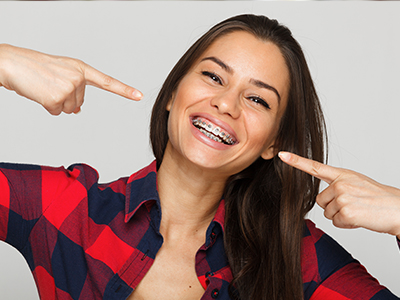

Most parents wonder when is the best time to have their child evaluated for braces. One common misconception regarding orthodontic treatment is to wait until all of your child's permanent teeth (except the wisdom teeth) are present. However, an orthodontist can identify most problems involving the alignment of the teeth and jaw growth by the time a child is in the first or second grade. For this reason, the American Association of Orthodontists recommends that all children have a check up with an orthodontic specialist no later than age 7.
It is important to keep in mind that aligning the teeth and the jaws does not happen overnight. Whether you are wearing conventional braces, clear aligners, or any other type of appliance, orthodontic movement is a gradual process. Orthodontic tooth movement is based on the use of light and continuous forces to correct your bite in an incremental, predictable, and healthy manner.
The total duration of orthodontic care, not including wearing retainers to maintain the result, depends on several factors. Such things as growth, as well as compliance with care, may influence treatment time. On average comprehensive orthodontic care to correct a malocclusion can take anywhere between 18-36 months. Orthodontic treatment for more limited problems with tooth alignment typically ranges from 6 to 18 months.
Because orthodontic movement takes time, most appointments after the initial placement of appliances are scheduled approximately four to eight weeks apart. This interval gives your teeth time to move at both a steady and healthy pace. However, there may be situations where more frequent visits to evaluate the status of your case, tooth movement, or to have an additional adjustment are required.
Teeth can be moved at any age. Orthodontic treatment as an adult can completely transform an imperfect and poorly aligned smile into one that is attractive and functions at its best. However, initiating orthodontic care and achieving a successful outcome relies on the presence of healthy teeth and supporting bone. For these reasons, it is essential for adult patients to address any outstanding dental problems before their appliances are placed and to remain diligent about maintaining their oral health throughout care.
Orthodontics is the dental specialty focused on diagnosing, preventing and correcting misalignment of the teeth and jaws. It uses controlled forces delivered by appliances such as braces, wires and clear aligners to move teeth into healthier, more stable positions. The goal is to improve function, facial harmony and long-term oral health while creating an attractive, efficient bite.
Orthodontic care ranges from minor tooth movements to comprehensive treatment that addresses jaw relationships and bite function. Clinicians plan treatment based on a thorough evaluation of teeth, gums, jaw joints and facial proportions to produce results that are both functional and natural in appearance. Good orthodontic planning also considers prior dental work and long-term stability when selecting appliances and staging procedures.
Good candidates include children, teens and adults who have misaligned teeth, bite problems or jaw growth concerns that interfere with chewing, speech or oral hygiene. An initial orthodontic assessment determines whether the issue is best addressed with early intervention, comprehensive movement, or minor corrections. The evaluation also checks periodontal health, existing restorations and other dental needs that must be managed before or during orthodontic care.
Patients with active gum disease or unstable dental restorations may need preparatory treatment to ensure tooth movement is safe and predictable. Likewise, patient commitment to appointments and appliance care factors into the recommendation to achieve lasting results. Treatment decisions are individualized so that both functional requirements and lifestyle preferences are addressed.
Clear aligners are a removable series of custom-made plastic trays that gently shift teeth by applying planned, incremental forces, while traditional braces use bonded brackets and wires to control tooth movement. Aligners tend to be more discreet and allow easier brushing and flossing because they are removed for oral hygiene, whereas braces provide fixed, continuous control that can be advantageous for more complex tooth movements. Both systems rely on careful planning and monitoring to achieve predictable outcomes.
Not every case is appropriate for aligner therapy; the choice depends on the type and severity of the tooth movement required, patient compliance and treatment goals. Fixed appliances may be recommended when precise tooth rotation, vertical control or complicated bite corrections are necessary. The clinician will explain the pros and cons of each option and recommend the approach most likely to produce a stable, functional result.
An orthodontic evaluation begins with a review of medical and dental history, a clinical examination of the teeth and jaws, and an assessment of facial proportions and bite function. Diagnostic records commonly include intraoral photos, digital scans or impressions, and three-dimensional imaging when indicated to show how teeth and jaws relate in space. These records allow the clinician to identify the underlying causes of malocclusion and to develop a personalized treatment plan.
During the consultation you will receive an explanation of the recommended treatment sequence, anticipated milestones and any additional procedures that may support the orthodontic plan. The team will discuss appliance options and expected responsibilities such as wear time for aligners or hygiene practices with fixed braces. Clear communication about goals and expectations is part of creating a predictable, comfortable care experience.
Treatment length varies widely depending on the complexity of the case, the type of appliances used and patient-specific factors such as growth and compliance. Many straightforward cases can be completed within several months to a year, while comprehensive corrections that address jaw alignment or severe crowding may take one to three years. The clinician provides an estimated timeline after diagnostic records are reviewed and a detailed plan is established.
Regular monitoring and adherence to instructions—for example, wearing aligners for the prescribed number of hours each day or keeping scheduled adjustment visits—help keep treatment on track. Midcourse adjustments to the plan are sometimes needed to refine movement and ensure stability. After active treatment, a retention phase is essential to protect the new tooth positions while tissues reorganize.
Correcting tooth alignment enhances oral hygiene by reducing hard-to-reach areas where plaque and food debris accumulate, which lowers the risk of decay and gum disease. A balanced bite distributes chewing forces evenly across teeth, minimizing abnormal wear, enamel fractures and strain on the jaw joints and muscles. These functional improvements contribute to the long-term preservation of teeth and the comfort of day-to-day activities like eating and speaking.
Orthodontic treatment can also improve speech clarity and reduce habits that impair development in growing patients. By addressing underlying skeletal or dental imbalances, clinicians can create more stable occlusion and reduce the need for extensive restorative work later in life. Overall, alignment and function reinforce one another to support oral health and patient well-being.
Children benefit from early screening so that developing problems can be identified while jaw growth can still be guided. Interceptive or phase-one treatments may involve simple appliances to correct crossbites, expand arches or preserve space for erupting permanent teeth, which can simplify later comprehensive care. Timing is case-dependent and aimed at addressing issues that, if left unchecked, could complicate or lengthen future treatment.
Routine dental visits provide opportunities to evaluate growth and dental development, and an orthodontic checkup is often recommended by age 7 when certain bite problems become easier to detect. When early treatment is indicated, the focus is on growth modulation and habit correction rather than full alignment of permanent teeth. The approach is staged to achieve healthier development and potentially reduce the extent of later intervention.
Adults of any age can benefit from orthodontic treatment, and modern options make alignment more flexible and discreet than in the past. Adult treatment requires careful evaluation of periodontal health, existing restorations and bone support so tooth movement is undertaken safely and complements other dental care. With appropriate planning, adults can achieve durable functional and aesthetic outcomes that integrate with restorative or implant work when necessary.
Bella Vida Dental offers options that consider the unique needs of adult patients, including aligner therapy and low-profile fixed systems that fit into professional and social lifestyles. Adults should expect a thorough diagnostic assessment and coordinated care when orthodontics intersects with restorative or periodontal treatment. Long-term maintenance and retention are emphasized to protect the investment in a healthier, more functional smile.
Retainers are essential for maintaining tooth positions after active movement ends because the periodontal ligament and surrounding tissues require time to reorganize and stabilize. Retention protocols can include removable clear retainers, Hawley-style retainers or bonded fixed retainers, and the choice depends on the teeth moved, patient preferences and long-term stability considerations. Wearing retainers as directed by the clinician is the most reliable way to minimize the chance of relapse.
Retention plans often begin with more frequent wear and transition to night-only use over time, though some patients may require long-term or indefinite retainer wear for certain tooth positions. Regular follow-up visits allow the team to monitor stability and address minor shifts early. Good oral hygiene and routine dental care support retention and the overall health of the results achieved.
Digital tools such as intraoral scanning, three-dimensional imaging and software-driven treatment planning have made diagnosis and appliance fabrication more precise and efficient. These technologies enable clinicians to simulate tooth movements, visualize outcomes and produce custom appliances or aligner series that closely match the planned treatment path. As a result, patients experience fewer surprises, reduced adjustment time and improved predictability of results.
Digital workflows also streamline communication between clinicians, laboratories and patients by providing clear visual treatment roadmaps and measurable progress checks. Custom bracket placement guides and specialized auxiliaries can be produced from digital data to enhance accuracy for complex movements. Overall, embracing digital methods improves comfort, shortens turnaround times and supports more consistent clinical outcomes.

Ready to schedule your next dental appointment or have questions about our services?
Contacting Bella Vida Dental is easy! Our friendly staff is available to assist you with scheduling appointments, answering inquiries about treatment options, and addressing any concerns you may have. Whether you prefer to give us a call, send us an email, or fill out our convenient online contact form, we're here to help. Don't wait to take the first step towards achieving the smile of your dreams – reach out to us today and discover the difference personalized dental care can make.