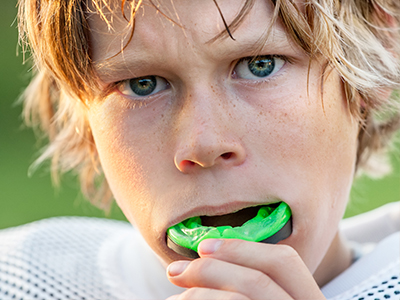
Sports-related impacts are a common source of dental and facial injuries, and many of these incidents are preventable. A properly fitted mouthguard acts as a first line of defense, absorbing and distributing force that might otherwise fracture teeth, damage restorations, or cause soft-tissue lacerations. Beyond teeth, a mouthguard can reduce the risk of lip, cheek, and tongue injuries and help protect the jaw from sudden, forceful blows.
In contact and collision sports, the speed and direction of forces are unpredictable, which makes personal protective equipment especially valuable. Even non-contact activities carry risk—accidental falls, stray equipment, and collisions with the ground account for many injuries. Wearing a mouthguard consistently during practice and competition is one of the simplest, most effective steps an athlete can take to reduce their chances of acute dental trauma.
Protecting the mouth also helps preserve long-term oral health. A single severe blow can lead to chipped or avulsed teeth, complicated restorative work, or long-term root and bone damage. Prevention through a well-chosen mouthguard minimizes the need for invasive dental procedures later on and keeps athletes active and confident in their performance.
Mouthguards are available in three main categories: stock (ready-to-wear), boil-and-bite, and custom-made by a dental professional. Stock mouthguards are pre-formed and sold in standard sizes; they are inexpensive and quick to use but often provide poor fit and limited protection. Boil-and-bite options offer an improved fit by softening in hot water and molding to the teeth, which makes them a popular over-the-counter compromise.
Custom mouthguards are fabricated from impressions taken by a dentist and are tailored to the individual’s oral anatomy. This customization results in superior fit, comfort, and retention, which enhances protection and makes breathing and speaking easier during activity. Custom devices can be designed to accommodate braces, implants, or other dental work, ensuring the appliance performs well under varied conditions.
When comparing options, consider fit, durability, and the ability to maintain proper airway clearance during exertion. Athletes who require more frequent or intense protection—such as those in football, hockey, lacrosse, or martial arts—typically benefit most from the precision and materials found in custom mouthguards. For occasional participants, a boil-and-bite may be a reasonable interim solution, provided it fits correctly and is in good condition.
Certain athletes and participants should strongly consider a custom mouthguard because of the level of protection and comfort it provides. Those with orthodontic appliances, extensive restorative work, or unique bite relationships are prime candidates for a tailored appliance that minimizes interference and avoids damage to dental hardware. Children and adolescents who are actively growing can also benefit from periodic adjustments and custom options that account for changing dentition.
Beyond anatomical considerations, individuals in high-impact or high-speed sports—where collisions, falls, or projectiles are common—have more to gain from a custom-fit device. Teams and solo athletes alike who practice regularly and compete at a high level will likely appreciate the improved fit and retention, which reduces distractions and helps maintain focus during play. Even recreational athletes who place a premium on safety and comfort often choose custom guards for peace of mind.
Finally, athletes who have experienced prior dental trauma or who depend on dental restorations for function and aesthetics should weigh their options carefully. A custom mouthguard provides a reliable barrier that helps preserve the investment in dental work and reduces the likelihood of additional, potentially complex treatment following an injury.
Getting a custom mouthguard begins with a dental appointment focused on assessment and impression-taking. The dentist or trained team member will evaluate your bite, existing restorations, and any appliances such as braces. This evaluation informs the design of the guard—whether it needs extra thickness in particular areas, accommodation for orthodontic brackets, or a specific profile to preserve airway comfort during exertion.
Impressions or digital scans are then taken to capture an accurate model of the mouth. Digital scanning offers a fast, comfortable alternative to traditional putty impressions and often speeds up laboratory fabrication. Once the model is prepared, the mouthguard is crafted from medical-grade materials chosen for shock absorption and durability. The lab process yields an appliance that snugly follows the contours of the teeth and gums while allowing natural jaw movement.
On delivery, the clinician will check fit and comfort, making minor adjustments as needed to ensure stable retention and unobstructed breathing. Instructions for use, cleaning, and storage are provided so the mouthguard performs reliably through regular wear. Follow-up checks are recommended if there are changes in dental work, orthodontic treatment progress, or repeated impacts that might alter the fit.
Proper care extends the lifespan of a mouthguard and helps prevent hygiene issues. Rinse the appliance with cool water after each use and clean it with a soft toothbrush and mild, nonabrasive soap or a cleaner recommended by your dental team. Avoid hot water, which can distort the material, and never use harsh chemicals or abrasive toothpaste that can degrade the surface over time. Store the mouthguard in a ventilated container to allow it to dry between uses and to protect it from pests and damage.
Inspect the mouthguard regularly for signs of wear like thinning, cracks, or deformation. A compromised guard will not absorb force effectively and can increase the risk of injury rather than reduce it. If you notice persistent odor, discoloration, or any changes in how the appliance fits, bring it to the attention of your dentist for evaluation. Routine checks are especially important for athletes undergoing orthodontic treatment, since tooth movement can affect retention.
Replacement intervals depend on activity level, appliance type, and material condition, but prompt replacement after significant wear or an impact is crucial. A well-maintained custom mouthguard often outperforms over-the-counter alternatives in longevity and protection, which is why many athletes and teams choose custom-fit options for ongoing use.
Choosing the right sports mouthguard is an important decision that balances protection, comfort, and fit. Whether an athlete opts for a quick over-the-counter solution or a precision-crafted custom appliance, consistent use and proper care are essential to reduce the risk of dental and facial injuries. A custom mouthguard offers the best combination of fit and function, particularly for those with dental work or who compete regularly.
Our practice brings clinical experience and modern fabrication methods together to deliver mouthguards that prioritize safety and performance. If you have questions about which type of guard is right for you or want to learn more about the fitting process, please contact us for more information. We’re here to help you protect your smile while you play.


Sports mouthguards absorb and distribute the forces of impact that would otherwise be concentrated on teeth and supporting structures, reducing the risk of fractures, avulsions, and damage to restorations. They also protect soft tissues such as the lips, cheeks and tongue from lacerations that commonly occur during collisions or falls. Consistent use during both practice and competition is one of the simplest ways an athlete can lower the chance of acute dental trauma.
Beyond immediate injury prevention, a properly fitted mouthguard helps preserve long-term oral health by lessening the likelihood of complicated restorative work and root or bone damage after a severe blow. For athletes who depend on dental restorations for function or appearance, the right guard can protect that investment and reduce the need for more invasive procedures later. Wearing a mouthguard consistently also helps athletes feel confident and focused while performing.
There are three common types of mouthguards: stock (ready-to-wear), boil-and-bite, and custom-made devices fabricated by a dental professional. Stock guards are inexpensive and preformed but often fit poorly, while boil-and-bite models improve retention by softening and molding to the teeth; both are available over the counter. Custom mouthguards are made from impressions or digital scans and are tailored to the individual for superior fit, comfort and retention.
When evaluating options, consider fit, breathability, durability and whether the guard accommodates any orthodontic appliances or restorative work. Custom devices generally provide the best balance of protection and comfort, particularly for athletes in high-impact or high-speed sports. For recreational or occasional participants, a well-fit boil-and-bite can be an interim solution, but regular inspection and replacement are important.
A custom mouthguard is recommended for athletes with orthodontic appliances, extensive dental restorations, implants or atypical bite relationships because these conditions benefit most from a tailored fit that avoids interference and protects dental work. Children and adolescents who are still growing can also benefit from periodic custom adjustments to accommodate changing dentition. Athletes who compete frequently or participate in collision sports often prefer custom guards for the improved retention and comfort they provide under sustained activity.
Individuals with a history of dental trauma or those who place a high priority on safety and performance may find the investment in a custom appliance worthwhile due to its enhanced protection and long-term durability. Custom guards can be designed with specific thicknesses and profiles where additional shock absorption is needed. The office of Bella Vida Dental can help determine whether a custom approach is the best fit for your needs.
The process begins with a clinical assessment in which the clinician evaluates your bite, existing restorations and any orthodontic appliances to determine functional requirements and areas that need extra protection. Next, impressions or a digital scan are taken to create an accurate model of the teeth and surrounding tissues; digital scanning is often faster and more comfortable for patients. The model is used by a dental laboratory or in-office fabrication system to craft a mouthguard from medical-grade materials chosen for shock absorption and durability.
At delivery the clinician checks fit, retention and breathing comfort, making subtle adjustments to ensure the appliance is stable without impeding natural jaw movement. You will receive instructions for wear, cleaning and storage as well as guidance on when follow-up checks are recommended, particularly for athletes undergoing orthodontic treatment or those who experience repeated impacts. Properly fitted custom guards should stay comfortably in place and allow clear speech and unobstructed breathing during exertion.
Rinse your mouthguard with cool water after each use and clean it regularly with a soft toothbrush and mild, nonabrasive soap or a cleaner recommended by your dental team; avoid hot water, harsh chemicals and abrasive toothpaste that can distort or degrade the material. After cleaning, let the appliance dry and store it in a ventilated case to protect it from damage, bacteria and pests when not in use. Regular cleaning helps prevent odors, discoloration and the growth of microorganisms on the surface of the guard.
Inspect your mouthguard before each use for signs of wear such as thinning, cracks, or deformation; any change in fit or persistent odor warrants evaluation. Never leave a mouthguard in direct sunlight, inside a hot vehicle or near a heat source, which can warp the material and reduce effectiveness. Routine care and proper storage will extend the life of the appliance and ensure it continues to perform as designed.
Mouthguards should be replaced when they show visible signs of wear such as tears, thinning areas, or permanent deformation, or after a significant impact that could compromise the device's shock-absorbing properties. Replacement is also necessary when orthodontic treatment, dental restorations or natural tooth movement changes the fit and retention of the appliance. For children and adolescents, more frequent replacement is often required to accommodate growth and changing dentition.
Even with careful maintenance, materials fatigue over time and a guard that once fit well may no longer offer optimal protection. If you notice changes in breathing, comfort or how the appliance seats on your teeth, consult your dental provider to evaluate whether a new guard is needed. Regular professional checks can help determine the ideal replacement interval based on activity level and material condition.
Mouthguards are primarily designed to protect teeth, soft tissues and the jaw by absorbing and dispersing direct impacts, and they do this effectively when properly fitted. Some laboratory studies and biomechanical analyses suggest that a well-fitted mouthguard can modestly reduce certain types of force transmission to the head, but the evidence is mixed and depends on many variables including impact direction and guard design. Because concussion mechanisms are complex and involve rapid brain motion inside the skull, a mouthguard should not be relied upon as a primary strategy for concussion prevention.
Concussion risk is best reduced through sport-specific protective equipment, rule enforcement, education on safe play and proper tackling or falling techniques. Use of a correctly fitted mouthguard remains an important component of overall protective strategy because it reliably prevents dental and facial injuries. Athletes and coaches should follow sport governing bodies' guidance and combine multiple preventive measures to lower concussion risk.
Mouthguards can be safely used with braces, implants and many types of dental restorations, but the appliance must be designed to accommodate hardware without compromising retention or protection. Boil-and-bite devices may not conform adequately around brackets or fixed prosthetics and can become uncomfortable or ineffective as teeth move during orthodontic treatment. Custom mouthguards are often the preferred choice for patients with braces or complex restorative work because they can be crafted to clear brackets and protect both appliance and soft tissues.
If you have implants, crowns or bridges, your dentist will evaluate how those restorations affect guard design and may recommend particular materials or thicknesses to ensure balanced protection and comfort. Regular monitoring is important during orthodontic treatment since tooth movement can change the fit; timely adjustments or remakes will keep the guard functioning as intended. Discuss your specific dental situation with your clinician so the appliance can be tailored to your needs.
Select a mouthguard based on the level of contact in your sport, how often you play and any unique breathing or speech needs during activity; high-contact sports typically call for the highest level of protection and fit. Consider whether you need an appliance that accommodates orthodontic appliances or restorative work, and prioritize devices that allow unobstructed breathing and clear speaking when required. Comfort and retention are critical since a guard that interferes with performance is less likely to be worn consistently.
Consult with a dental professional for guidance on the best option for your sport and anatomy, and ask about material choices that balance shock absorption and durability. Check that the guard meets sport-specific regulations or team requirements, and inspect it regularly for wear or damage. Ultimately, the best mouthguard is one you will wear reliably and that maintains a secure, comfortable fit throughout activity.
To obtain a custom mouthguard, schedule a consultation with our team to review your dental history, current restorations or orthodontic appliances and the demands of your sport or activity. During the appointment we will perform an examination, take impressions or a digital scan, and discuss the design features that best meet your protective and comfort needs. The impressions or scans are used to fabricate an appliance from medical-grade materials that follows your anatomy precisely.
When the custom mouthguard is delivered we will verify fit, retention and breathing comfort, making any necessary adjustments for stable performance. Follow-up evaluations are recommended if you experience significant dental changes, repeated impacts or orthodontic tooth movement that could alter the fit. If you would like to learn more or schedule an appointment, our Tucson practice can guide you through each step of the process.

Ready to schedule your next dental appointment or have questions about our services?
Contacting Bella Vida Dental is easy! Our friendly staff is available to assist you with scheduling appointments, answering inquiries about treatment options, and addressing any concerns you may have. Whether you prefer to give us a call, send us an email, or fill out our convenient online contact form, we're here to help. Don't wait to take the first step towards achieving the smile of your dreams – reach out to us today and discover the difference personalized dental care can make.